

If the same drain in your home keeps clogging no matter how many times it gets cleared, you are not imagining it. A slow sink, a gurgling toilet, or water backing up in the shower that returns week after week almost always means something more than a simple blockage is going on. Common culprits behind recurring drain clogs include grease buildup, tree root intrusion, a sagging or bellied pipe, and in many South Florida homes, aging polybutylene piping that has begun to deteriorate from the inside.
We hear this from homeowners throughout Boynton Beach, Boca Raton, Lake Worth, and West Palm Beach more often than you might expect. A one time clog can happen to anyone, but a pattern of recurring clogs is your home’s way of telling you something more significant is going on, and it usually is not something a standard snake job can fully resolve.
Warning Signs of a Deeper Drain Problem
Before we get into causes, it helps to know what separates a routine clog from a recurring one that needs real attention. Watch for:
- The same drain clogging again within days or a few weeks of being cleared
- Multiple fixtures backing up around the same time, such as a toilet gurgling when you run the washing machine
- Slow drainage that never fully returns to normal, even right after service
- Unpleasant odors coming from drains that were recently cleaned
- Water backing up in a shower or tub when a toilet is flushed, which usually points to the main line rather than a single fixture
If any of these sound familiar, the issue is likely further down the line, or in the pipe material itself, not just in the section a standard cleaning reaches.
Why This Keeps Happening: Common Causes Behind Recurring Drain Clogs
Everyday Buildup That Snaking Only Partly Clears
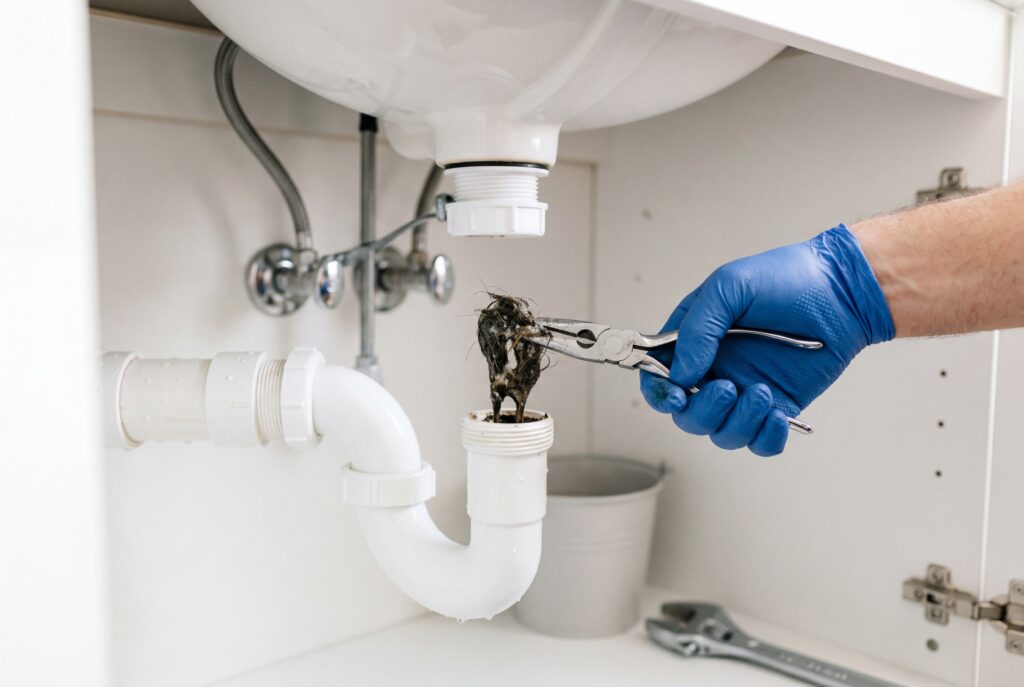
A lot of stubborn blockages start with things that go down the drain every day. Fats, oils, and grease coat the inside of kitchen pipes and harden as they cool, trapping food particles behind them. In bathrooms, hair mixes with soap scum to form a web that catches more debris over time. Flushable wipes are another frequent offender. Despite the label, most do not break down the way toilet paper does, and they can snag inside the line and create a partial dam. When a technician snakes a clog like this, it is possible to punch a channel through the blockage without clearing all of it, which is one of the most common reasons a clog returns.
Problems in the Line Itself
Sometimes the pipe, not what is inside it, is the real problem. Tree roots are drawn to the moisture inside sewer lines and can work their way in through small cracks or loose joints, growing into a mass that catches waste and keeps causing recurring drain clogs no matter how often the line is cleared. A “bellied” or sagging section of pipe, where shifting soil has caused part of the line to sink, creates a low spot where waste collects instead of flowing away. Older cast iron or clay pipes can also crack or develop rough channels along the bottom, giving debris somewhere to catch every time.
Polybutylene Pipes: A South Florida Specific Cause
In homes built roughly between the late 1970s and mid 1990s across Palm Beach County, we frequently find that the piping material itself is behind the recurring clogs. Polybutylene was once marketed as an affordable, flexible alternative to copper, but it does not hold up well against oxidants like chlorine that are common in municipal water. Over years, the interior surface breaks down and becomes flaky and rough. That rough texture catches hair, grease, and waste far more easily than a smooth pipe wall would, so even a thorough cleaning leaves the real problem untouched.
If you want to check your own home, look for pipe that is dull gray, blue, black, or silver, usually visible near the water heater, under sinks, or where lines come out of the wall for toilets and faucets. Many sections are stamped with the letters “PB” followed by numbers such as “PB2110.” These signs can point you in the right direction, but the only way to know for certain, and to see the pipe’s actual internal condition, is a professional camera inspection.
What to Do Next: Getting to the Real Cause
If cleaning alone has not solved the problem, the next step is usually a closer look at what is actually happening inside the line. A drain line inspection and repair can identify whether you are dealing with root intrusion, a bellied section, or interior pipe damage, rather than guessing based on symptoms alone. From there, options range from targeted repair or hydro jetting for a localized issue, to a broader conversation about your piping if the material itself is the source of the trouble.
When polybutylene is confirmed as the cause, patching or repeated cleanings tend to be short term measures at best. Many homeowners in this situation eventually look into polybutylene re-pipe services as a way to address the clogging at its source rather than continuing to treat the same symptom every few months. Every home is different, though, and the right next step really does depend on what an in person inspection actually finds.
When to Call a Professional
A single clog you can usually handle yourself or with one service call. It is time to bring in a professional when:
- The same drain clogs again shortly after being cleared
- More than one fixture is affected at the same time
- You notice gurgling, odors, or slow drainage that does not fully clear
- Your home was built in the era when polybutylene piping was common in South Florida
At DC Plumbing of South Florida, our technicians walk through your full range of plumbing services with you, from drain line diagnostics to water heater and fixture work, so a recurring clog gets solved as part of the bigger picture rather than treated in isolation. As a state licensed master plumber, our owner has built our practice around solving problems at the source, and it is worth noting that pipe failures like these have a documented history recognized by the U.S. Consumer Product Safety Commission, which is part of why we take polybutylene concerns seriously rather than treating them as routine wear and tear.
Conclusion
Recurring drain clogs are rarely bad luck. They are usually a sign that grease and debris buildup, root intrusion, a sagging pipe, or aging polybutylene piping is causing the same problem to resurface no matter how many times a line gets cleared. For over 30 years, three generations of the Cakic family have helped homeowners throughout Boynton Beach, Boca Raton, Lake Worth, and West Palm Beach get to the real source of plumbing issues like this one. Every home is different, and the details matter, which is why we always recommend a proper inspection before assuming you know what is going on inside your pipes. If your drains keep backing up no matter how many times they have been cleaned, reach out to our team through our callback request page and we will take an honest look at what your home actually needs.
Frequently Asked Questions
Why does my drain keep clogging after being snaked? Snaking often creates only a temporary channel through a larger blockage of grease or hair. Recurring drain clogs more often point to a deeper issue such as tree roots in the sewer line, a sagging or bellied pipe, or the rough, deteriorating interior of aging pipes like polybutylene.
How can I tell if I have polybutylene pipes? Look for flexible pipe that is dull gray, blue, or black near your water heater or under sinks, usually stamped with a code such as “PB2110.” A professional inspection is the most reliable way to confirm it.
Is replacing my pipes the only way to stop recurring clogs? When the clogs are caused by deteriorating pipe material, replacement tends to be the most reliable long term fix. For issues like tree roots or heavy grease buildup, hydro jetting or targeted line repair may resolve the problem without a full re-pipe.
What are the signs of a main sewer line clog? Multiple fixtures backing up at once, gurgling from a toilet when you run a sink or shower, and water rising in a tub or shower when the toilet is flushed are all signs that point toward the main line rather than a single fixture.
How much does fixing recurring drain clogs typically cost? Cost depends on the cause, whether it is root intrusion, a damaged section of pipe, or a full re-pipe, and on the size and layout of your home. The most accurate way to get a number is an on-site assessment from a licensed plumber.