

Your Home’s Unsung Hero: Understanding Backflow Prevention
As a homeowner in South Florida, you value the clean, safe water that flows from your taps every day. It’s a cornerstone of a healthy home, used for everything from cooking and cleaning to drinking and bathing. But what if that pristine water supply was at risk of contamination from external sources? This is the danger posed by backflow, a serious plumbing issue that many homeowners are unaware of until it’s too late.
Backflow prevention is one of the most effective ways to protect your family’s water supply from contamination. It goes beyond fixing leaky faucets or repairing pipes by preventing pollutants from entering your drinking water in the first place. This guide from DC Plumbing of South Florida explains how backflow occurs, why it’s a concern for residents in Boca Raton and Boynton Beach, and why professional backflow prevention solutions are essential for protecting your home.
What Is Backflow and Why Is It a Major Concern?
In the simplest terms, backflow is the unwanted reversal of water flow in your plumbing system. Instead of water flowing from the municipal supply into your home, water from your property—and any contaminants it has picked up—can flow backward into the clean water lines. This can contaminate your home’s drinking water and, in some cases, the public water supply.
This reversal is typically caused by a change in water pressure and can happen in two primary ways.
Back-Siphonage
Back-siphonage occurs when the pressure in the public water main suddenly drops, creating a vacuum effect. This can happen due to a water main break or firefighters using a nearby hydrant. This vacuum can pull water from your home’s plumbing or even an external source back into the clean supply lines.
A common example is a garden hose left in a bucket of soapy water or a swimming pool. Without proper backflow prevention, contaminated water could be siphoned back into your home’s drinking water.
Back-Pressure
Back-pressure happens when the water pressure in your home’s plumbing system becomes greater than the pressure of the main water supply. This can force contaminated water back into the public system.
This is less common in residential settings but can occur in homes with complex systems like boilers or pressure-boosted irrigation.
The risks are significant. Backflow can introduce harmful substances such as fertilizers, pesticides, chlorine from pools, chemicals, and bacteria into your drinking water, creating serious health concerns.
The Solution: Backflow Prevention Devices
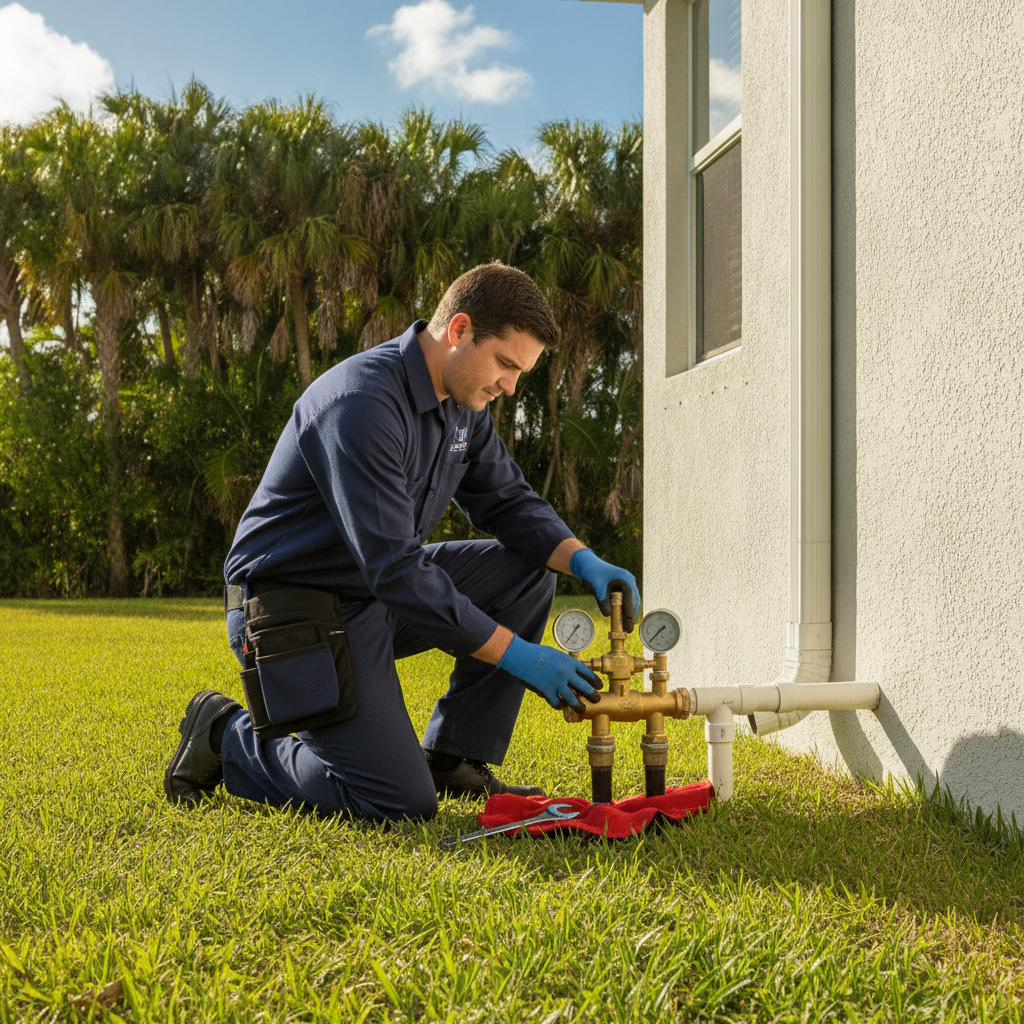
A backflow prevention device is a specialized plumbing assembly installed on your home’s water pipes to ensure water flows in only one direction—into your home. Think of it as a one-way security gate for your water supply. These mechanical devices automatically detect and stop reverse water flow, keeping contaminated water separated from your clean water.
Several types of backflow prevention devices are available, and a qualified South Florida plumber can determine the right option for your home’s irrigation system, pool fill line, or other plumbing application. Learn more about our backflow installation and repair services for professional installation and code-compliant solutions.
Is a Backflow Preventer Necessary for Your South Florida Home?
Many homeowners wonder whether they need a backflow preventer. In many cases, particularly throughout Boca Raton and Boynton Beach, local plumbing codes require backflow prevention devices for specific applications to protect both homeowners and the community.
You will almost certainly need a backflow prevention device if your property includes:
- An in-ground irrigation or sprinkler system
- A swimming pool or spa with an automatic fill line
- A residential fire sprinkler system
- A water-fed boiler system
Even if your property is not required to have one, installing a backflow prevention device is a proactive investment in your family’s health and helps ensure your drinking water remains clean and safe.
For more information about how cross-connections affect public drinking water systems and why backflow prevention is important, review the Florida Department of Environmental Protection’s Cross-Connection Control and Backflow Prevention Program.
The Importance of Professional Installation
Installing a backflow preventer is a precise task that should never be a DIY project. The safety of your water supply depends on selecting the proper device and installing it correctly. For reliable backflow prevention, always work with a licensed and insured plumbing professional—ideally a State Licensed Master Plumber who is Backflow Certified.
An experienced plumber will:
- Assess your property’s specific plumbing needs.
- Select the correct type and size of backflow prevention device.
- Install the device according to local plumbing codes and manufacturer specifications.
- Test the system to ensure it functions properly.
- Verify compliance with municipal regulations.
Improper installation can lead to leaks, device failure, code violations, and contamination of your drinking water. Professional installation ensures the job is completed safely and correctly.
Ongoing Maintenance: Backflow Testing and Repair
Backflow preventers are mechanical devices with internal seals, valves, and springs that naturally wear over time. Regular maintenance is essential to ensure continued backflow prevention for your home.
Most municipalities throughout Palm Beach County require residential and commercial backflow preventers to be tested annually by a certified professional. Our certified backflow testing services help ensure your device remains compliant and your drinking water stays protected.
During the inspection, specialized testing equipment measures pressure and verifies that the internal valves are functioning correctly. If the device fails the inspection, repairs or replacement should be completed immediately.
Regular testing is not just a local requirement—it is an important part of protecting your family’s drinking water and maintaining an effective backflow prevention system.
Choosing a Backflow Expert in South Florida
When you need backflow prevention services—including installation, testing, maintenance, or repair—you need a plumbing company you can trust.
DC Plumbing of South Florida is a family-owned and operated business with more than 20 years of experience serving homeowners and businesses throughout Boca Raton, Boynton Beach, and the surrounding communities. Our owner is a State Licensed Master Plumber, and our team is Backflow Certified, bringing generations of plumbing expertise to every project.
We are fully licensed and insured, provide prompt service, and are committed to honest workmanship and dependable plumbing solutions.
Whether you need a new backflow prevention device installed, annual testing, or repairs, we’re here to help protect your home’s water supply. Explore our backflow installation and repair services or schedule backflow testing to keep your system operating safely and in compliance with local requirements.
Frequently Asked Questions
How often does my backflow preventer need to be tested?
Most local water authorities throughout South Florida require residential and commercial backflow preventers to be tested once every year. Check with your local municipality for its specific requirements.
What are the signs my backflow preventer might be failing?
Common signs include discolored or foul-smelling water, reduced water pressure, or visible leaks around the device. If you notice any of these issues, contact a certified plumber as soon as possible to restore proper backflow prevention.
Can I install a backflow preventer myself?
No. Installing a backflow prevention device requires specialized training and certification. Improper installation can result in contamination, plumbing code violations, and device failure.
Is backflow prevention only necessary for homes with irrigation systems?
No. Although irrigation systems are the most common reason homeowners need backflow prevention, these devices are also recommended for properties with swimming pools, boilers, fire suppression systems, or any plumbing connection that could allow contaminated water to enter the potable water supply.