

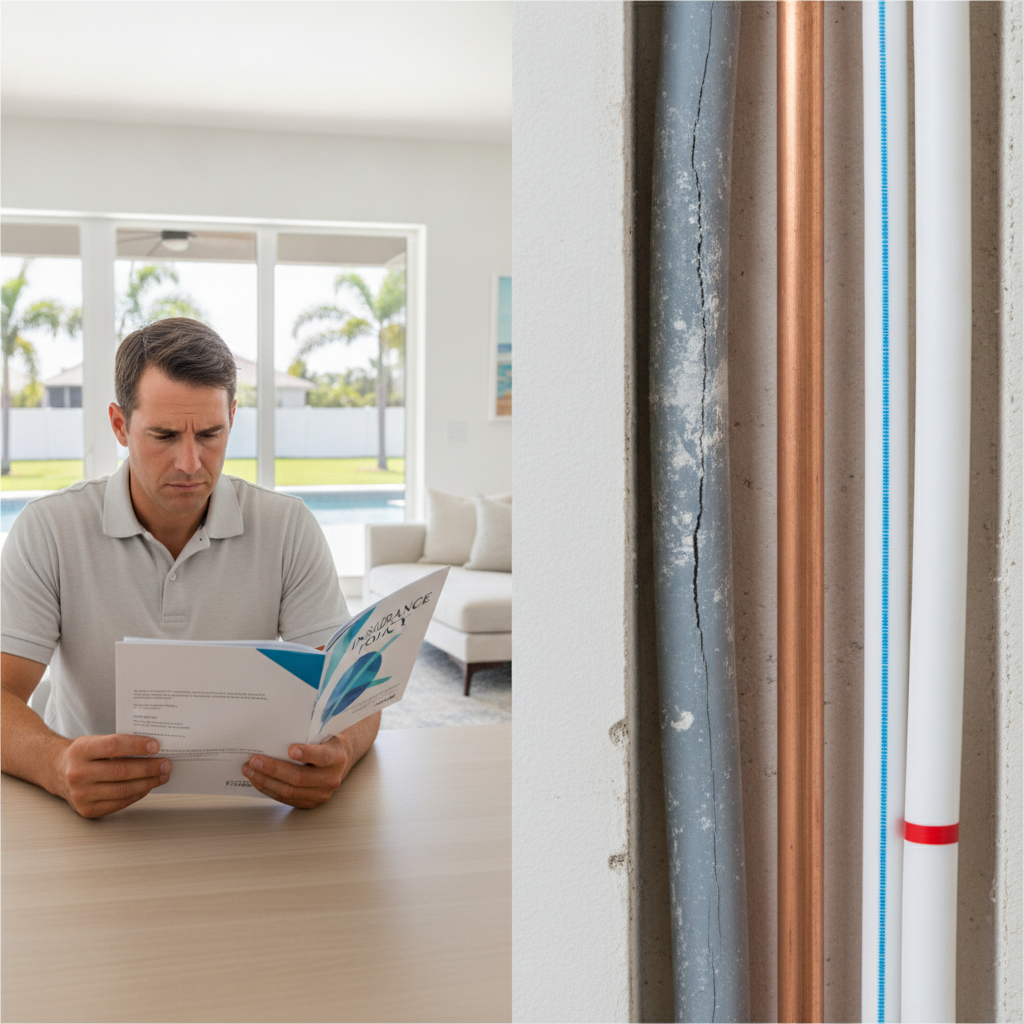
For homeowners in beautiful Boynton Beach, protecting your investment is a top priority. You maintain your roof, service your air conditioner, and prepare for storm season. But one of the most significant threats to your home’s integrity could be lurking unseen within your walls: polybutylene piping.
If you’re concerned about Polybutylene Pipes Boynton Beach, you’re not alone. This once-popular plumbing material is now a well-known liability, causing major headaches for property owners, especially when it comes to securing or maintaining homeowners insurance. Learn more about the trusted South Florida plumbing services offered by DC Plumbing of South Florida for inspections, repairs, and complete repiping solutions. If your home was built between the late 1970s and mid-1990s, this guide from DC Plumbing of South Florida will walk you through what you need to know about polybutylene pipes and how they impact your insurance coverage in South Florida.
What Exactly Are Polybutylene Pipes?
Polybutylene (often abbreviated as Poly-B) is a type of plastic resin that was used extensively for residential plumbing systems from approximately 1978 to 1995. It was hailed as a material of the future due to its low cost, flexibility, and ease of installation. Builders across the country, including many in developing Florida communities like Boynton Beach, widely adopted it.
Unfortunately, a critical flaw emerged over time. The chemical compounds in municipal water, such as chlorine, react with the polybutylene polymer, causing it to become brittle from the inside out. This degradation leads to micro-fractures, leaks, and eventually, catastrophic failure. Because the damage starts internally, a pipe can look perfectly fine on the outside right up until the moment it bursts, causing extensive water damage.
How to Identify Polybutylene Pipes in Your Florida Home
Identifying whether you have Polybutylene Pipes Boynton Beach homes are known to contain is the first crucial step. While a professional inspection from a licensed South Florida plumber is the only definitive way to confirm, you can perform a preliminary check yourself. Here’s a guide to help you determine whether your home has polybutylene pipes.
Check the Color
One of the easiest visual cues is the color of the pipes. Most polybutylene plumbing is a distinctive light gray. However, it can also be found in other colors, including:
- Blue: Typically used for cold water lines.
- Black or Silver: Less common, but still used.
- White: Often used for fittings and joints.
Look for these colors on pipes coming from your water heater, under sinks, and connected to toilets.
Look for the Stamp
The most reliable indicator is the code stamped on the pipe itself. Look for the letters “PB2110.” This code is the technical standard for polybutylene piping and confirms its presence in your home.
Common Locations to Check
- Entering the house from the main water supply line.
- Connected to the water heater.
- In the attic or crawlspace.
- Underneath sinks in your kitchen and bathrooms.
- Leading to toilets and showers.
If you see flexible plastic pipes in these areas, especially if they are joined with copper or plastic fittings, it’s worth a closer look. Homeowners dealing with Polybutylene Pipes Boynton Beach properties should schedule a professional inspection to confirm the type and condition of their plumbing system. Incorrectly identifying your pipes can lead to a false sense of security.
The Big Problem: Polybutylene Pipes and Homeowners Insurance
For insurance companies, risk management is the name of the game. Due to a history of class-action lawsuits and billions of dollars in property damage claims, polybutylene pipes in Florida are now considered a major liability. Insurers are increasingly unwilling to take on the risk associated with these failing systems.
If your home has Polybutylene Pipes Boynton Beach, you may encounter the following insurance challenges:
- Difficulty Obtaining a New Policy: If you’re buying a home, your home inspector will almost certainly flag the presence of polybutylene pipes. Most insurance carriers will refuse to write a new policy for a home with this type of plumbing, which can jeopardize your mortgage approval and the entire sale.
- Policy Cancellation or Non-Renewal: Many insurers are actively auditing their existing policies. If they discover your home has polybutylene piping, they may choose not to renew your policy or even cancel it with short notice, leaving you scrambling to find coverage.
- Higher Premiums and Limited Coverage: The few companies willing to insure a home with Poly-B often charge significantly higher premiums. They may also include an exclusion clause for any water damage originating from the plumbing system, which defeats a major purpose of having homeowners insurance in the first place.
The Proactive Solution: A Whole-Home Re-Pipe
Waiting for a leak is not a viable strategy. The most effective way to protect your home, secure affordable insurance, and gain peace of mind is to replace the polybutylene piping entirely. This process, known as a re-pipe, involves removing the old, unreliable pipes and installing a modern, durable system like PEX or copper.
For homeowners with Polybutylene Pipes Boynton Beach, a whole-home re-pipe is a permanent solution and a valuable investment. If you’re dealing with an active leak or burst pipe, DC Plumbing of South Florida also provides emergency polybutylene pipe repair to protect your home from costly water damage before a full replacement can be completed.
The benefits are substantial:
- Insurance Security: A new plumbing system makes your home insurable with standard, affordable policies.
- Increased Property Value: A home with updated plumbing is far more attractive to potential buyers and can command a higher price.
- Prevention of Water Damage: You eliminate the risk of a sudden pipe burst and the costly, disruptive cleanup that follows.
- Improved Water Flow: Old pipes can have buildup that restricts water flow. New pipes often lead to better water pressure.
Choosing the Right Professional for the Job
When it comes to something as critical as your home’s plumbing, you need a team you can trust. Look for an established, family-owned & operated company with deep roots in the community. It’s essential to hire a State Licensed Master Plumber who is fully licensed and insured.
An experienced South Florida plumbing specialist will understand the unique construction styles of homes in Boynton Beach and Boca Raton and can perform the re-pipe efficiently with minimal disruption to your daily life. Danny is an honest professional and will provide a clear estimate and ensure the job is done right the first time.
If you need expert advice about Polybutylene Pipes Boynton Beach, DC Plumbing of South Florida can inspect your plumbing system, explain your options, and recommend the most effective replacement solution.
For homeowners facing issues with polybutylene piping in Florida, it’s crucial to consult with experienced professionals. If you have questions about your plumbing system or need a reliable assessment, contact Danny at DC Plumbing of South Florida at (561) 571-9389. Whether you’re dealing with aging plumbing or planning a full replacement, trust the experts in Polybutylene pipe repair and replacement to help protect your home and restore your peace of mind.
Frequently Asked Questions (FAQ)
1. What does polybutylene pipe look like?
Polybutylene pipe is a flexible plastic pipe, most commonly light gray in color, but it can also be blue, black, or silver. The most definitive way to identify it is to look for the printed code “PB2110” on the side of the pipe.
2. How long does a whole-house re-pipe take?
While it depends on the size and complexity of your home, an experienced crew can typically complete a full re-pipe in just a few days. Many homeowners replacing Polybutylene Pipes Boynton Beach appreciate that professionals use strategic methods to minimize disruption throughout the project.
3. Is replacing polybutylene pipes necessary if they aren’t leaking yet?
Yes. The degradation happens from the inside out, so there are often no external warning signs before a catastrophic failure. Being proactive is far less expensive and stressful than dealing with a major flood and the subsequent water damage restoration.
4. Will my insurance company find out I have polybutylene pipes?
It’s very likely. Insurers often learn about polybutylene pipes through four-point inspections, during appraisals when you buy or refinance, or if a plumber reports it after a service call. It is always best to be transparent and address the issue directly.
5. Can I just repair a small leak in a polybutylene pipe?
While a small section can be repaired, it doesn’t solve the systemic problem. A leak in one area is a strong indicator that the rest of the system is just as brittle and likely to fail soon. A full re-pipe is the only recommended long-term solution for homes with Polybutylene Pipes Boynton Beach.