

For homeowners in South Florida, from the serene communities of Boca Raton to the vibrant neighborhoods of Boynton Beach, protecting your property is a top priority. While you may be prepared for hurricanes and summer heat, a hidden threat could be lurking within your walls: polybutylene piping. If your home was built or re-plumbed between the late 1970s and the mid-1990s, you might have this problematic plumbing, which could be a ticking time bomb for leaks and water damage.
This guide from DC Plumbing of South Florida will walk you through the essential steps for identifying polybutylene pipes, understanding the risks they pose, and knowing what to do next. Being proactive is the key to preventing a potential disaster and securing your peace of mind.
What Exactly Are Polybutylene Pipes?
Polybutylene (often called Poly-B) is a form of plastic resin that was used extensively in the manufacturing of water supply piping from approximately 1978 to 1995. It was seen as a futuristic material: flexible, inexpensive, and easier to install than traditional copper pipes. Builders across the country, including many in Florida, adopted it for residential plumbing. Today, identifying polybutylene pipes has become important for homeowners looking to prevent unexpected plumbing failures and water damage.
However, it was soon discovered that these pipes had a critical flaw. Oxidants commonly used in municipal water treatment, such as chlorine, react with the polybutylene material, causing it to become brittle and crack from the inside out. This means the pipes can appear perfectly fine on the surface while being on the verge of failure. This inherent weakness led to numerous lawsuits and the eventual discontinuation of their use.
How to Identify Polybutylene Pipes in Your Home
Finding out if you have Poly-B plumbing is the first crucial step. You don’t need to be a professional plumber to do some initial investigation. Here’s a breakdown of what to look for and where to find it. This knowledge is key for anyone concerned about polybutylene pipes in Florida.
Check the Color
The most common question homeowners ask is, what color is polybutylene pipe? For interior plumbing, polybutylene pipes are most often a distinctive, dull gray color. You may also find them in black or white, but gray is the primary indicator. For exterior main water lines, they were often blue to signify their use for cold water.
Look for Specific Markings
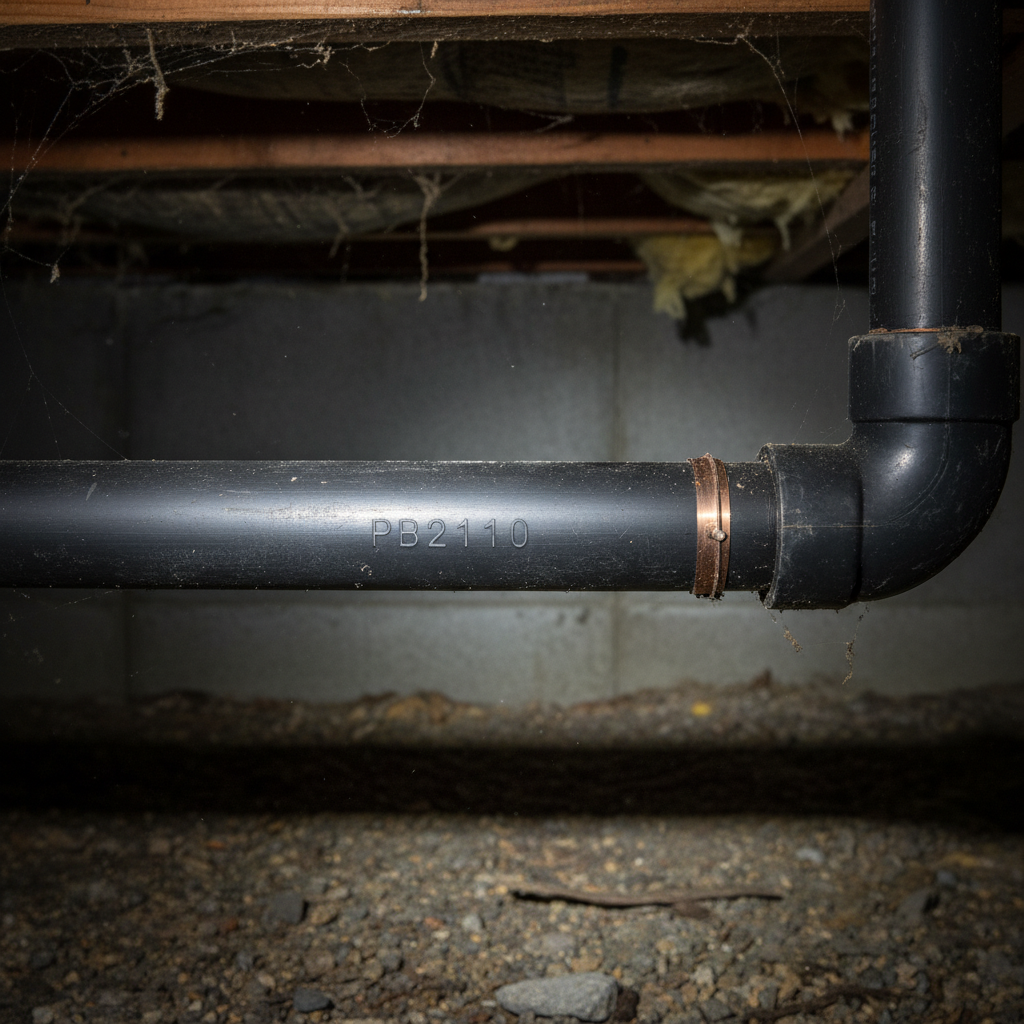
The most definitive way how to identify polybutylene pipes is to look for the printed code on the pipe itself. The pipes are almost always stamped with the code “PB2110”. You may need a flashlight to find this marking. If you see “PB2110” printed on a gray, flexible pipe, you can be certain you have polybutylene plumbing.
Know Where to Look
Polybutylene pipes are not always visible, but you can typically find exposed sections of your plumbing in several key areas. Grab a flashlight and check these common spots:
- Near your water heater: The pipes connecting to the hot water tank are often exposed.
- Under sinks: Look at the water supply lines beneath your kitchen and bathroom sinks.
- In your attic or crawlspace: Check along joists where pipes may be running.
- At the main water shutoff valve: The pipe entering your home from the meter is a common place to check.
Examine the Fittings
Another clue is the type of fittings used. Polybutylene systems often use plastic or copper fittings that are held in place by aluminum or copper crimp rings. The combination of a dull gray plastic pipe with these metal rings is a strong sign of a Poly-B system. Properly identifying polybutylene pipes early can help homeowners avoid costly water damage repairs.
The Risks of Polybutylene Piping for Florida Homeowners
The presence of polybutylene piping in Florida homes is more than just a minor inconvenience; it’s a significant liability. The warm, humid climate does not help the longevity of any building material, but the primary risk comes from the chemical composition of the pipes themselves and the complications they create.
First, there’s the high risk of failure. Because the pipes degrade from within, a leak can happen suddenly and without any warning. This can lead to catastrophic water damage, destroying drywall, flooring, furniture, and personal belongings. These failures are not a matter of ‘if’ but ‘when’. Early identifying polybutylene pipes can help homeowners avoid unexpected plumbing disasters and costly structural damage.
Second, having Poly-B plumbing can cause major issues with homeowners insurance and real estate transactions. Many insurance companies are hesitant to cover homes with these pipes, and some may refuse coverage altogether. During a home sale, the presence of poly pipes Florida inspectors find will almost always become a major point of negotiation, potentially devaluing the property or even killing the deal. Buyers are increasingly aware of this issue and often demand a full re-pipe before closing.
What to Do If You Discover Poly-B Pipes
If you’ve followed the steps above and suspect or have confirmed you have polybutylene pipes, don’t panic. The important thing is to take decisive action to mitigate the risk.
- Get a Professional Inspection: The first step is to call a qualified South Florida plumber. A professional can confirm the material, assess the overall state of your plumbing system, and provide a clear picture of your situation. An experienced plumber will know exactly how identifying polybutylene pipes should be handled and check for signs of imminent failure.
- Understand Your Options: Patching or repairing a single leak in a polybutylene system is a temporary fix at best. Since the entire system is made of the same degrading material, a failure in one spot indicates the weakness of the whole network. The universally recommended and only permanent solution is a complete re-piping of your home, replacing the old polybutylene with a more durable material like PEX or copper.
- Choose the Right Specialist: A full re-pipe is a significant job, and you want it done right. It’s essential to choose a plumbing company that specializes in this type of work. Look for a team with proven experience, proper licensing, and a deep understanding of the unique challenges posed by polybutylene pipes in Florida.
Finding an Honest Professional for Your South Florida Plumbing Needs
When it’s time to address your plumbing, you need a team you can trust. DC Plumbing is a Family Owned & Operated business with a legacy of three generations dedicated to serving South Florida families. As a State Licensed Master Plumber, our owner ensures every job meets the highest standards of quality and professionalism. We are Licensed and Insured, Backflow Certified, and specialize in polybutylene re-pipes, providing homeowners in Boca Raton and Boynton Beach with reliable, long-term solutions.
If you’re concerned about your home’s plumbing and want an honest assessment, we’re here to help. For a professional inspection or to learn more about the re-piping process, feel free to contact our team. Our experts specialize in identifying polybutylene pipes and helping homeowners protect their properties from future plumbing failures. We are committed to providing a fast response and helping you protect your most valuable asset. You can reach us at (561) 571-9389.
Frequently Asked Questions
Q1: Is every gray plastic pipe in a home polybutylene?
Not always, but it is the most common indicator. Other materials like PEX or CPVC can sometimes be gray. The best way to be certain is to look for the “PB2110” stamp on the pipe. A professional South Florida plumber can help with identifying polybutylene pipes and provide a definitive identification.
Q2: How disruptive is a whole-home re-piping project?
Experienced professionals work to minimize disruption. The process typically involves cutting small, precise holes in the drywall to access and replace the old pipes. A skilled team can often complete the entire project in a matter of days, and the water is usually only shut off for a few hours at a time. Properly identifying polybutylene pipes before starting the project helps plumbers create a more efficient replacement plan.
Q3: Can I just replace a small section of polybutylene pipe that has a leak?
While technically possible, it’s strongly advised against. This is considered a spot repair and doesn’t address the systemic issue. The entire plumbing system is deteriorating at the same rate, and fixing one leak often precedes another one springing up elsewhere. A full re-pipe is the only way to eliminate the risk permanently.
Q4: Will my homeowners insurance policy cover damages from a polybutylene pipe failure?
Coverage varies significantly between insurance providers. Due to the well-documented failure rate of polybutylene, many policies contain specific exclusions for damage originating from these pipes. It is crucial to review your policy or speak with your insurance agent to understand what is and isn’t covered.